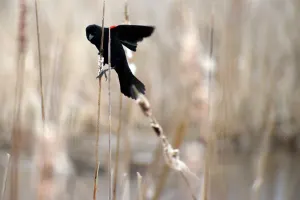
Bobolink
About the Bobolink
The breeding male Bobolink looks like he is wearing a tuxedo backwards — jet black underneath with a bright white back and rump and a warm straw-yellow patch on the nape. In flight over a hayfield he pours out a bubbling, tumbling, mechanical song that sounds like a wind-up toy or the robot R2-D2, delivered on quivering wings. Females and fall birds are far plainer, streaky buff and brown like oversized sparrows.
Bobolinks are grassland specialists, nesting on the ground in Michigan's hayfields, meadows, and remaining grasslands from May into July. That habitat puts them in conflict with modern farming, since early and frequent hay mowing destroys nests before the young can fledge, and the species is now Near Threatened and declining. After breeding they undertake one of the longest migrations of any American songbird, a round trip of thousands of miles to the grasslands of southern South America.
Diet
Eats insects and spiders during the breeding season, gleaned from grasses and the ground, then shifts to seeds and grains during migration and on the wintering grounds — a diet that historically earned it the nickname "ricebird" in the southern states. Nestlings are fed almost entirely on insects.
Questions birders ask
What is that bubbling, R2-D2-like song over the field?
That joyful, tumbling, mechanical song is a male Bobolink, usually sung in a fluttering display flight over a hayfield or meadow. It is unlike any other bird sound in Michigan.
Why is the Bobolink declining?
Its ground nests in hayfields are highly vulnerable to early and repeated mowing, which destroys eggs and young before they can fledge. Loss of grassland habitat compounds the problem, and the species is now Near Threatened. Delaying hay cutting helps.
Where can I find one?
In open grasslands — hayfields, meadows, and prairie remnants, especially in agricultural parts of the state. Males sing from tall grass stems, fence wires, and in flight from late May into July.
Why do male Bobolinks stop looking black and white?
Males molt out of the striking reversed-tuxedo plumage in late summer and leave Michigan looking like the streaky yellow-buff female. It is one of the few North American songbirds with two completely different plumages a year.
Easily confused with
Other birds you might be looking at instead.