Cackling Goose
About the Cackling Goose
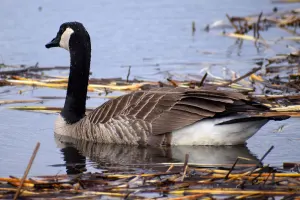
The Cackling Goose looks like a Canada Goose that has been shrunk in the wash — same black neck and head with a white chinstrap, same brown body, but noticeably smaller, with a distinctly stubby, triangular bill, a rounder head, and a shorter neck. Long considered simply a small form of the Canada Goose, it was recognized as a separate species in 2004, and telling the two apart has since become a favorite challenge, especially since the smallest Cackling Geese are little bigger than a Mallard while the largest Canada Geese are huge.
Cackling Geese breed on the tundra of the far north and pass through Michigan as migrants, chiefly in fall and into winter, almost always mixed in among the abundant Canada Geese on fields, marshes, and lakes. Sorting a genuinely small, stubby-billed Cackling Goose out of a flock of variable Canada Geese takes care, since size alone can mislead. Their higher-pitched, yelping calls and compact, round-headed look help pick them out from their larger, longer-necked relatives.
Diet
Grazes on grasses, sedges, waste grain, and aquatic plants in fields, marshes, and along lake edges, much like the Canada Goose. It feeds in flocks on agricultural land and wetlands during migration, clipping green vegetation and gleaning spilled grain.
Questions birders ask
How do I tell a Cackling Goose from a Canada Goose?
The Cackling Goose is smaller with a stubby, triangular bill, a rounder head, and a shorter neck, and often a higher-pitched call. Size can mislead, since Canada Geese vary greatly, so the bill and head shape are the most reliable clues.
Is it really a separate species?
Yes. Long treated as a small form of the Canada Goose, the Cackling Goose was split off as its own species in 2004 based on genetic and other differences, though the two remain very similar in appearance.
When and where can I see one?
Mostly in fall and winter, mixed in among flocks of Canada Geese on fields, marshes, and lakes. It breeds on far-northern tundra and passes through Michigan as a migrant and winter visitor.
What do young Cackling Geese look like?
Goslings and first-year birds look like miniature adults, with a slightly duller cheek patch and softer flank barring. Size and the stubby bill matter far more than plumage for separating them from Canada Geese.
What is a flock of Cackling Geese called?
A gaggle on the ground and a skein in flight. They rarely form pure flocks here; scan large Canada Goose gatherings for the smaller, short-billed birds instead.
Easily confused with
Other birds you might be looking at instead.