Canada Jay
About the Canada Jay
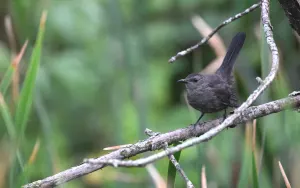
The Canada Jay is a soft, fluffy gray jay of the northern conifer forest, famous for its boldness and its uncanny tameness — it will glide silently in to investigate a hiker, a campsite, or a hunter's kill, and readily takes food from an outstretched hand, earning old names like "whiskeyjack" and "camp robber." Rounded and crestless, pale gray with a white face and a dark patch on the back of the head, it looks almost like an overgrown chickadee and shares none of the raucous flash of its blue-jay cousin.
Canada Jays are remarkable food-storers, coating morsels with sticky saliva and gluing thousands of them to bark and needles throughout their territory to retrieve through the long northern winter. This cached food lets them survive the cold and even nest in late winter, incubating eggs while snow still blankets the forest. In Michigan they are year-round residents of the spruce and mixed conifer forests and bogs of the Upper Peninsula, a much-loved emblem of the north woods. The species was recently renamed Canada Jay after years as the "Gray Jay."
Diet
An omnivorous generalist, eating insects, berries, fungi, carrion, small animals, and human food scraps, and famously bold in approaching people for handouts. It caches enormous quantities of food, gluing morsels with sticky saliva to bark and conifer needles to retrieve during winter.
Questions birders ask
Why is the Canada Jay so tame?
It is naturally bold and curious, and in the far north it benefits from investigating campsites and kills for food. It readily approaches people and takes food from the hand, earning nicknames like "whiskeyjack" and "camp robber."
How does it survive northern winters?
It caches thousands of food items through the warm months, gluing them with sticky saliva to bark and needles, then relies on these stores through winter. This cached food even lets it nest in late winter amid the snow.
Where does it occur in Michigan?
As a year-round resident of the spruce and mixed conifer forests and bogs of the Upper Peninsula. It does not occur in most of the Lower Peninsula, being a bird of the north woods.
Easily confused with
Other birds you might be looking at instead.