Every year around this time, we see a slowdown at bird feeders. No cardinals, no chickadees, barely a goldfinch. Did something happen? Is the seed bad? Did a hawk move in?
Almost certainly not. The August feeder lull is one of the most predictable patterns in Michigan backyard birding, and there are four good reasons behind it.
1. There's Better Food Everywhere
This is the big one. August is peak natural abundance in Michigan. Berries are ripening, seed heads are maturing, and insect populations are at their annual high. A sunflower feeder is convenient, but it can't compete with a yard full of caterpillars, beetles, elderberries, and dogwood fruit.
Birds are opportunists. When wild food is easy, feeders become a backup plan. Come November, when the insects are gone and the berries are stripped, they'll be back.
2. Molt
Most Michigan songbirds replace their feathers after breeding, and late summer is when it happens. Molt is metabolically expensive and leaves birds temporarily less agile, so many species become quiet and secretive while they get through it, skulking in dense cover rather than sitting exposed on a feeder pole.
It also explains the strange-looking birds people report this month. Bald Northern Cardinals and Blue Jays with gray, featherless heads are the classic August sighting. It looks alarming and it isn't a disease, some simply drop all their head feathers at once instead of gradually. They grow back within a few weeks.
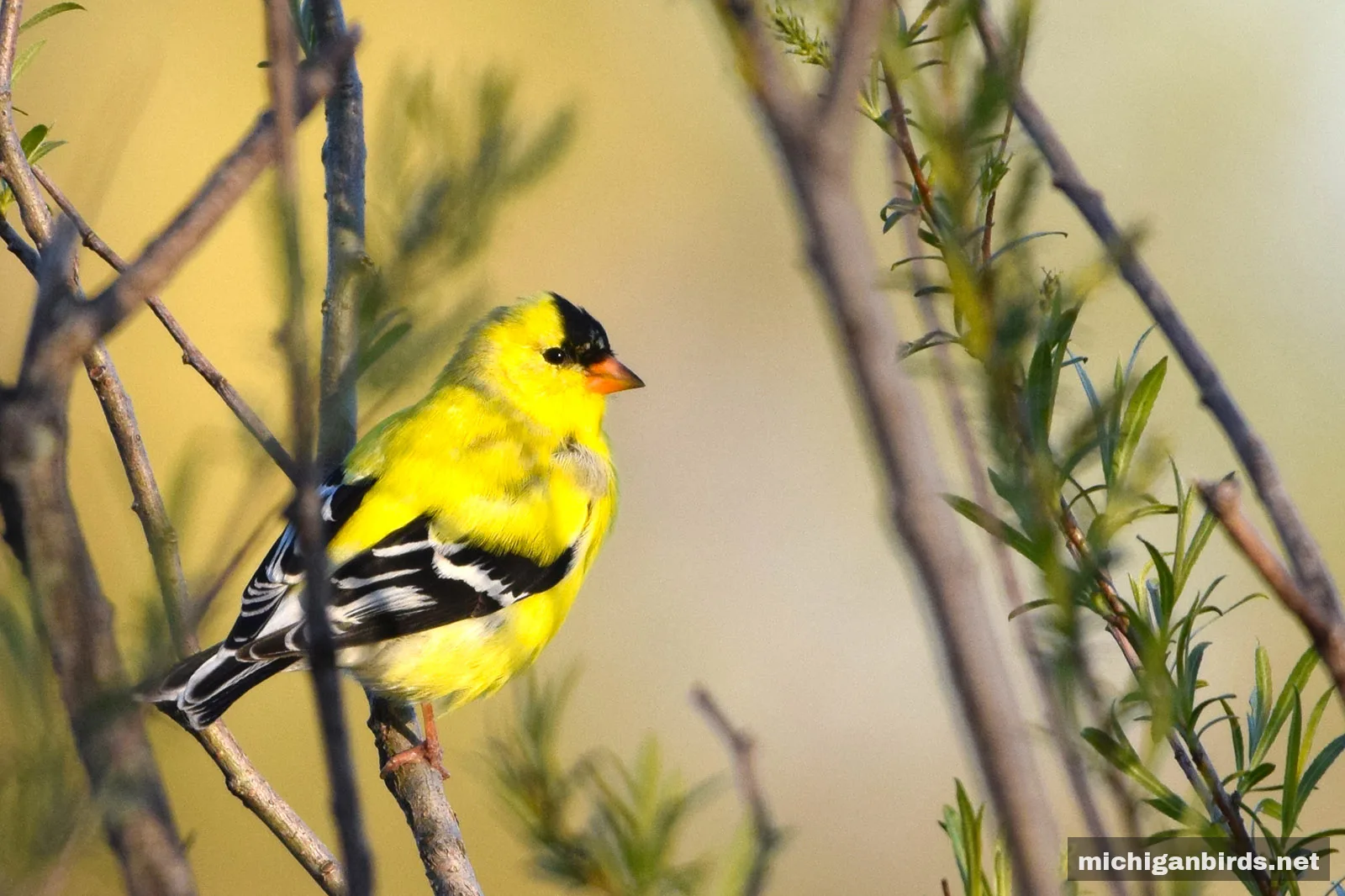
Meanwhile, male American Goldfinches are still in bright yellow, because goldfinches run on a completely different schedule. They're Michigan's latest nesters, timing their broods to thistle and milkweed seed. In August they're often still feeding young while everyone else is finished. American Goldfinches do undergo a complete molt into their dull winter plumage shortly after breeding wraps up (typically late September into October).
3. Nesting Is Over and Families Have Dispersed
Through spring and early summer, adults are anchored to a territory and making constant trips to feed nestlings, which means constant feeder traffic. Once the young fledge and become independent, that pressure disappears. Families break up, juveniles wander, and adults stop commuting.
Some species also form roaming mixed flocks in late summer. Black-capped Chickadees, White-breasted Nuthatches, Downy Woodpeckers, and warblers travel together in loose bands that sweep through an area and move on. Your yard may go days without a visit, then get everything at once.
4. Some Birds Have Already Left
Baltimore Orioles and Rose-breasted Grosbeaks are among the earliest to head south, and many are gone or going by mid-August. If your feeders felt busiest in May and June, part of that was migrants and early breeders who simply aren't here anymore.
What to Do About It
Keep the feeders up, but keep them clean. Warm, humid August weather spoils seed fast and raises the risk of disease transmission at crowded feeders. Take seed feeders down every couple of weeks and wash them; scrub hummingbird feeders and change the nectar every two to three days in the heat.
Speaking of which, leave the Ruby-throated Hummingbird feeders out. Hummingbird traffic actually peaks in late August as birds fuel up for migration, running against the general trend.
Fresh water helps more than food does right now. A clean, shallow birdbath in the shade will out-perform any feeder in a dry August week.
And if you want a busier yard next August, the real answer is planting: native berry shrubs and seed-bearing perennials, which feed birds exactly when feeders can't compete.